Why sizing matters in Sri Lanka
The “right” solar size is the one that matches your roof space, your monthly electricity units, and your chosen grid scheme. If the system is too small, you won’t offset much of your bill. If it is too large, you may generate surplus you can’t fully benefit from under the scheme you selected. PUCSL also highlights that, especially for net metering, the idea is to install a capacity that matches your monthly consumption.
A simple output rule you can use
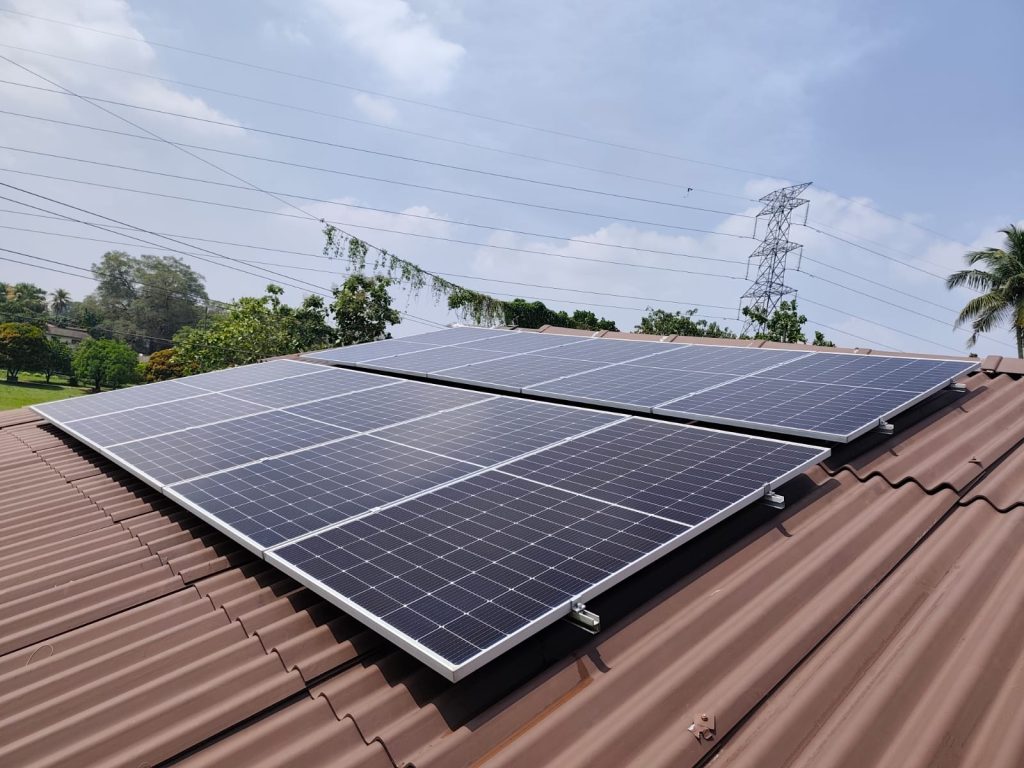
A practical Sri Lanka-friendly rule of thumb is that 1 kWp of solar can generate up to about 4–5 kWh (units) per day under good conditions, and it needs roughly around 10 m² of roof area. This varies with weather and season, but it’s a useful planning baseline.
Using that, 1 kW often lands around 120–150 units per month (very roughly). So you can estimate:
System size (kW) ≈ average monthly units ÷ 130 (approximate middle value).
Step 1: Find your real monthly usage
Check your last 6–12 electricity bills (CEB/LECO) and note the units (kWh) per month. Use the average and also note the highest months. If you plan to add an A/C, electric hot water, or shift to induction cooking later, factor that increase now so you don’t undersize the system.
Step 2: Convert units to a target system size
If you want a quick mapping, here’s the common way people choose between 3kW, 5kW, and 10kW based on monthly units.
When 3kW makes sense
A 3kW system is usually a good fit when your average consumption is roughly in the 300–450 units/month range, and you mainly want to reduce your bill rather than export large surpluses. Roof space-wise, plan around 30 m² (rule of thumb).
When 5kW makes sense
A 5kW system is often chosen when your average usage is roughly 500–750 units/month, such as larger households, households with daytime usage, or mixed home-and-work usage. Roof space-wise, plan around 50 m² (rule of thumb).
When 10kW makes sense
A 10kW system is usually considered when you are around 1,000–1,500 units/month or when it’s a business, villa, or a high-usage household. Roof space-wise, plan around 100 m² (rule of thumb).
Step 3: Check roof reality (not just numbers)
Even if your bill suggests 5kW or 10kW, the roof must support it properly. Shading from nearby buildings/trees, weak roof sections, poor orientation, and limited continuous space can reduce output. Sri Lanka’s solar resource is strong overall, but it still varies by time of year and weather patterns, which is why the site survey matters.
Step 4: Pick the scheme that matches your goal
If your goal is mostly bill reduction, many people aim to size closer to their monthly usage (especially under net metering). If you expect frequent surplus exports, schemes like net accounting or net plus may be more relevant, depending on current rules and tariffs.
Final note (and how Envolec can help)
If you want the simplest correct answer, it comes from a quick bill review plus a proper site survey. Envolec Technologies (PVT) LTD can help you choose between 3kW, 5kW, and 10kW based on your real consumption, roof layout, and the best scheme for your situation.
Envolec Technologies (PVT) LTD
Phone Number: +94 76 373 3442
They have completed over 30+ projects island wide, and you can check customer feedback on Reviews Along with solar panel solutions, they also provide other solar-related services and solar components, so you can build a complete, reliable setup with one team.